
How to Buy Paint Online Without Color Regrets or Shipping Surprises
Posted by Tommy Ekstrand on 01/15/2026
Key Takeaways
- Picking the right paint (surface + sheen + durability) matters as much as picking the color.
- Computer and phone screens are fine for inspiration, but don't match reality. Sampling in the actual space is non-negotiable.
- Shortlist 3-5 colors, view them on multiple walls, and check them morning/afternoon/night.
- Order enough to finish your project in one batch whenever possible, keeping extra for touch-ups.
- Temperature and delivery timing matter during cold snaps.
The short version
- Choose a quality paint for your surface.
- Before falling in love with a color, match the paint to your job - many online brands don't have cabinet, trim, or exterior paint. Choose the highest quality paint in your budget for easier application, better color, and longer lasting results.
- Shortlist colors from a trusted palette.
- Use online photos to select 1-3 shades of each color you're interested in from a palette you trust to be consistent and well-balanced. Higher end color systems handle undertones and neutrals better than others.
- Sample your finalists in real light.
- Test your top colors in the actual space, not on a screen. Look at them morning, afternoon, and night, and compare them next to anything that isn’t changing (floors, counters, cabinets). The larger the sample size the better.
- Plan your order.
- Determine if you need a primer which can help improve adhesion, hide imperfections, and cover major color changes. Measure carefully and order enough to finish the project in one go. Keep extra for touch-ups.
- Receive delivery and prep to paint.
- Bring it inside promptly, especially in extreme temperatures. Most shipment arrive in great shape, but it's safest to inspect the cans right away. Let the paint reach room temperature, then stir or shake thoroughly before you paint.
The detailed version
If you've ever tried to buy paint online, you already know the two big fears: the color won't look the way it did on your screen, and the shipment won't arrive in perfect shape. The good news is that ordering paint online can be straightforward when you treat it like a design decision (light + undertones + sheen) and a logistics decision (weight + temperature + packaging). Let's walk through the process so that your paint shows up the way you expected and looks the way you hoped.
Choose the right paint
When color disappoints, it's not always the color's fault. The wrong sheen or the wrong product for the surface can change how light reads the wall—and how "finished" the result feels.
Confirm what you're painting
- Interior walls and ceilings: prioritize smooth appearance, washability, and a sheen that suits the room's light.
- Trim and doors: look for a durable finish designed for high-touch surfaces.
- Cabinets: choose a cabinet/trim product built for hardness and block resistance (so doors and drawers don't stick).
- Exterior: you'll want strong adhesion, UV resistance, and weather performance suited to your climate and substrate.
Choose sheen with intention (because sheen changes color)
Sheen affects how much light bounces off a surface, which changes how you perceive depth and undertones. Two paints with the same name can look surprisingly different in matte vs eggshell vs satin.
- Matte / Flat: soft, forgiving, lower reflection—often best for color depth and calm(read, no kids) interiors.
- Eggshell: (most common interior wall sheen) a gentle glow. Extremely common for living spaces and hallways where you want some wipeability.
- Satin: (most common for exterior and high touch surfaces) noticeably reflective. Great for durability, but it can emphasize texture(also imperfections) and shift how color reads.
- Semi-gloss: highly reflective. Often reserved for trim/doors where you want a crisp, clean look.
Don't guess on primer
- If you're painting new drywall, use a drywall-appropriate primer first.
- If you're covering stains, tannins, or smoke/water marks, use a stain-blocking primer(interior) (exterior) designed for that problem.
- If you're painting over glossy or slick surfaces, use a bonding primer to improve adhesion.
- If you're making a dramatic color change, primer will reduce coats and help the new color look cleaner.
Color accuracy online
Online color browsing is useful for narrowing options, but it should never be your final decision tool. Your screen, your lighting, and your surroundings all influence what you see.
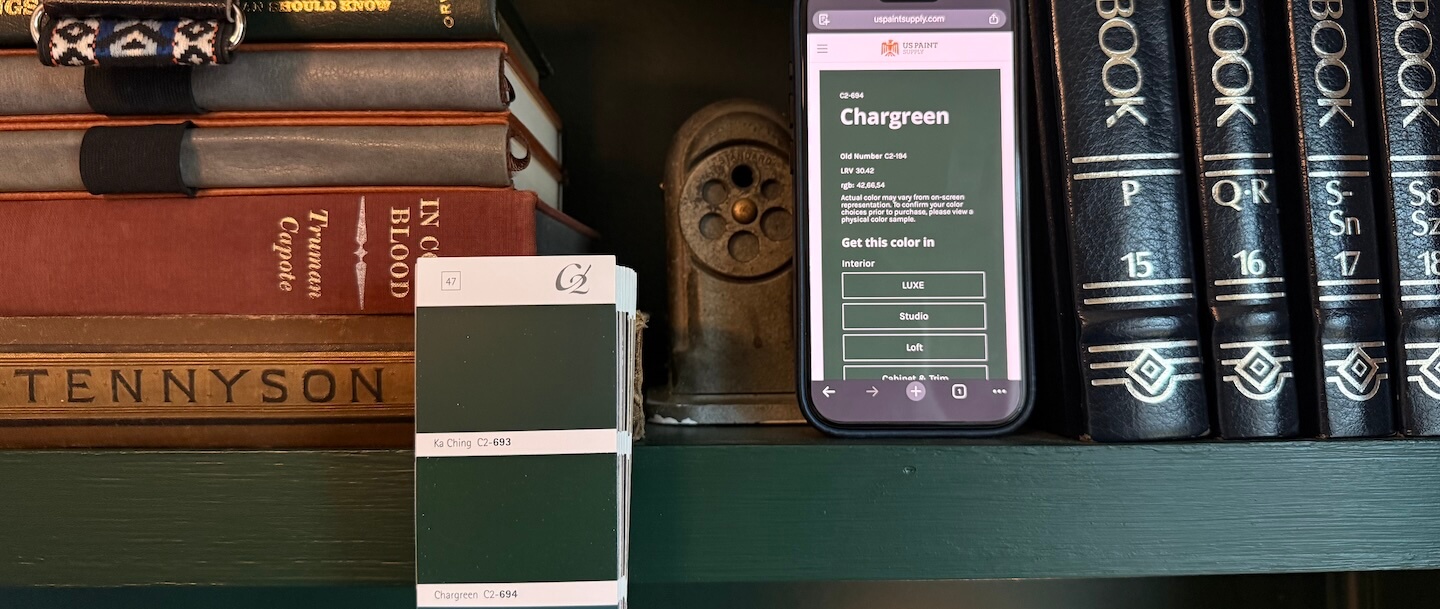
Why screens are unreliable for final color decisions
- Screens emit light while paint reflects light.
- The same color will look different between phone, tablet, and monitor(s).
- Screen settings change the look of whites and neutrals dramatically(night shift, game mode).
- Real light changes by angle and color. North-facing room reads cooler vs South; warm bulbs can make neutrals feel creamier.
- Especially in complex saturated colors, subtle or "hidden" tones, known as undertones only show in real light.
Choose the right type of sample
Sampling isn't just a "nice-to-have." It's the only reliable way to avoid expensive reorders and weeks of second-guessing.
| Rank | Sampling method | Best for | Pros | Watch-outs |
|---|---|---|---|---|
| Good | Fan deck / small paint chips | Shortlisting colors | Fast comparison across many colors | Often printed, don't use real paint *Depends on brand |
| Better | Painted sample area (from a small sample pot) | Understanding coverage | Shows true color as paint; reveals undertones and sheen | Takes time; needs dry time to read accurately |
| Best | Large-format paint chip | Undertones, scale, final decision | Easy, clean, and more realistic than small chips | Still not identical to a full wall |
Our recommended paint sampling process to prevent regret
- Start with 3–5 finalists in each category. It's fine to compare 3-5 greens vs 3-5 reds, but don't compare 20 reds, you'll be overwhelmed.
- Test on more than one wall. Light changes from wall to wall (especially near windows and hallways).
- Check morning / afternoon / night. Undertones often show up at "in-between" times (late afternoon is a classic surprise moment).
- Pair it with what won't change. Flooring, countertops, cabinets, and large rugs matter more than the throw pillows you might replace later.
- If you're stuck between two colors, go bigger. Increase the sample size (larger chip or bigger painted area) before you order gallons.
- (optional) Spend years mastering miniature modeling and create a perfectly scaled room that you can put your head inside of.
How shipping works and how to avoid damage
Paint is heavy, liquid, and sensitive to temperature swings. Most problems happen when one of those realities is ignored. If paint is packaged thoughtfully and delivered at the right time, it typically arrives just fine.
What good packaging looks like
- Leak protection: sealed lids plus can clips.
- Impact protection: padding/dividers that keep cans from banging into each other.
- Double wall box: paint is dense—thin cartons don't hold up well.
- Clear handling: the box should be packed like it's going through real-world shipping (because it is).
Temperature and timing matter
Most modern architectural paints are water-based, meaning freezing ruins the product. That's why timing your delivery matters as much as picking your color.
- Avoid delivery windows when temperatures may drop below freezing. If you're ordering during winter weather, plan for someone to bring the box inside quickly.
- Don't paint immediately after cold transit. Let paint acclimate to room temperature before you open and use it.
- Be cautious with "vacation deliveries." A box on a porch for two days is rarely ideal for paint.
Delivery day checklist
- Inspect the box before opening. If it's crushed or wet, take a quick photo.
- Check cans for dents or leaks. Pay attention around lids and seams.
- Set paint inside to stabilize. Give it time to reach room temperature.
- Contact the retailer promptly if something's off. It's easier to solve shipping issues right away than on painting day.
Reorders and returns
When you order paint online, the biggest "returns" risk is color—not because paint brands are careless, but because custom-tinted colors are inherently specific. Many retailers can't resell a custom color once it's mixed.
Avoid reorders
- Order enough to finish in one go whenever possible (same product, same sheen, same color mix).
- Keep a little extra for future touch-ups—especially in high-traffic areas.
- Save your order details (color name/code, sheen, product line, and order number) so reorders are easy.
Avoid returns
- Sample first in the real space.
- Confirm product + sheen before ordering.
- Measure your space and plan quantity carefully. Running short is one of the most common online-order frustrations. It's typically worth the cost of an extra gallon, and then you have extra for touch ups in the future.
- Ask questions early. A five-minute conversation can prevent a five-hour repaint.
Why some premium brands feel "easier" to order online
When paint shopping happens at a distance, confidence comes from systems: clear color tools, reliable sampling options, and support that helps you choose well the first time.
Better sampling tools reduce "screen shock"
Brands that take color seriously offer better ways to evaluate it in real conditions. That means larger paint chips, real paint-made samples (not printed approximations), and curated palettes that simplify decisions for real rooms.
Support matters when you can't stand at the paint counter
Online ordering works best when you can still get guidance—especially for undertones, sheen selection, and "how will this look next to my floors?" questions. That's where an experienced paint retailer can make the process feel calmer and more predictable.
FAQ
What are the best places to order paint online?
Stay tuned for our comparison article. For now(we're biased) but we think buying C2 from us or directly from C2 is your best choice if you live in the lower 48 states.
Is it safe to buy paint online?
It can be, especially for water-based paints, when the retailer packs shipments carefully and you plan delivery timing around temperature and availability. The biggest risks are usually avoidable: choosing color without sampling, ordering the wrong sheen, or letting paint sit outside in extreme weather.
Will the color look the same as it does on my screen?
Absolutely not. Screens vary, and your room's lighting and surrounding materials play a huge role. Use your screen to shortlist, then sample in your space to confirm undertones and depth.
What's the best way to sample paint colors at home?
Use the largest size sample size possible in real light on multiple walls. If you're undecided between two options, increase the sample size (larger format sample or a bigger painted area) so undertones have room to show up.
Does sheen affect how the color looks?
Yes. Higher sheens reflect more light, which can make colors look brighter, cleaner, or sometimes a bit "sharper." Lower sheens tend to feel softer and can show color depth more naturally—especially in rooms with lots of sunlight.
How do I avoid running out of paint mid-project?
Measure carefully, plan for the surface texture you're painting (texture increases usage), and order enough to finish in one batch if you can. Keeping a little extra for touch-ups is worth it.
What should I do if paint arrives dented or leaking?
Take photos right away and contact the retailer promptly. Don't wait until painting day—shipping issues are easiest to resolve while the delivery details are fresh.
What next
If you're ready to order, the best next step is simple: confirm the product and sheen, then sample your finalists in your space before committing to gallons. If you'd like help narrowing undertones or choosing the right finish for your room, our team is happy to help you think it through.
- Explore C2 LUXE ultra-premium interior paint (for walls and ceilings where color and finish matter)
- Explore the 496 full spectrum(no black pigment) C2 Paint colors
- Learn how cabinet coatings differ (if you're deciding between wall paint, trim paint, and cabinet-grade finishes)